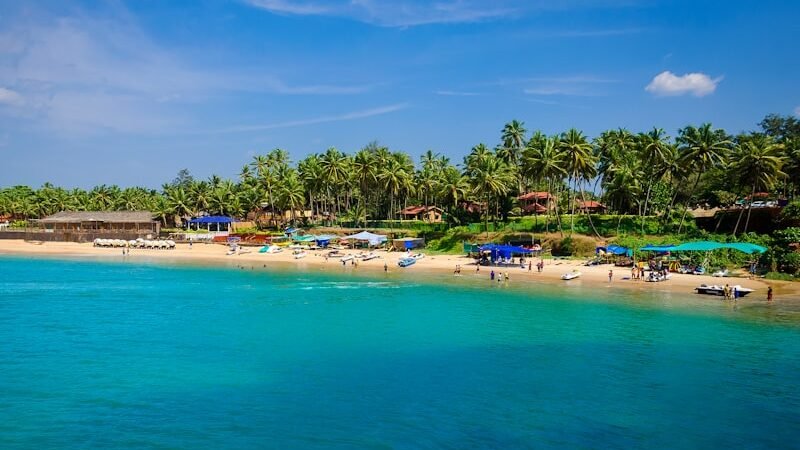
Mopa — North Goa District
Mopa Airport, officially Manohar International Airport, is Goa’s second airport, located in North Goa, serving domestic and international flights, and developed by GMR on a PPP model to boost tourism and cargo for Goa and the Konkan region.
It caters to passengers heading to northern Goa beaches and beyond, offering an alternative to Dabolim. The inauguration of Mopa International Airport in 2023 has played a crucial role by opening up new areas for development.
Pernem — Northernmost Part of Goa
Pernem — pher-naym. Pernem is a sub-district and town in the northernmost part of Goa, serving as the state’s gateway from Maharashtra. It is known for its beaches, religious sites and a moderate climate. Considered the “Gateway of Goa” from the Maharashtra side, it is a common entry point into the state, located approximately 27 km from Panaji.
Dabolim — South Goa
Dabolim — da-buh-lim. Dabolim is a village in South Goa, famous primarily for hosting Goa International Airport, the state’s main airport for decades, serving both domestic and international flights before the new Mopa airport opened.
It’s near Vasco da Gama, approximately 30 km from the state capital Panaji, and known for its proximity to beaches like Hollant Beach — a serene, less crowded beach in South Goa, known for its quiet, scenic beauty, east-facing sunrise views, and calm waters. It offers a peaceful escape with lush green surroundings and traditional fishing vibes, unlike busier North Goa beaches.
Assagao — North Goa
A-sa-gao. Assagao is a quiet inland village known for leafy streets lined with elegant colonial villas and Portuguese-era churches. It’s an up-and-coming hub for creative businesses, home to design boutiques selling art, clothing and jewellery, plus upscale resorts, trendy restaurants and yoga retreats.
Siolim — North Goa
Shi-who-leem. Siolim is a village in the North Goa district, known for its tranquil atmosphere and natural beauty, and often used as a gateway to other beaches in North Goa.
Canacona — South Goa
Canacona is a city and municipality in the southernmost part of South Goa, known for its natural beauty, serene beaches, and wildlife. It is a popular tourist destination, famous for beaches like Palolem and Agonda, and for attractions such as the Cotigao Wildlife Sanctuary. Canacona is also the gateway to many of southern Goa’s beaches.
Porvorim — North Goa
Pore-voh-rim. Porvorim is the de facto legislative and executive capital of the state of Goa, as both the Goa Legislative Assembly and Secretariat function from the same complex. It is also the de facto judicial capital of Goa — the High Court of Bombay at Goa (Bombay High Court, Panaji Bench) now functions from here.
Panaji — North Goa District
Puhn-jee. Panaji, also known as Panjim, is the state capital of Goa and its largest urban agglomeration, located on the banks of the Mandovi River estuary where it meets the Arabian Sea. The city has cobblestone streets lined with colourful villas and buildings from the Portuguese colonial era. It was the heart of Portuguese India, became the capital in 1843, and is a busy port city.
Anjuna — North Goa District
An-joo-na. Anjuna is a laid-back coastal village on the Arabian Sea in Goa. It was a well-known destination among hippies in the 1960s. Each Wednesday, a sprawling flea market sells handicrafts, jewellery and food.
Vagator — North Goa District
Vuh-gah-tor. Vagator is a lively coastal area centred on Vagator Beach, known for its striking red cliffs. Vagator Cliff is a popular party spot drawing hip crowds to watch the sunset from sea-view bars and clubs.
Agonda — South Goa
Agonda is a peaceful, scenic village in South Goa, famous for its long, clean and less crowded Agonda Beach, known for golden sands, calm waters, and a laid-back vibe with eco-resorts. It’s a protected turtle nesting site, offering activities like kayaking, dolphin watching and yoga.
Palolem — South Goa
Pa-loh-lem. Palolem is a famous, picturesque crescent-shaped beach in South Goa known for its calm turquoise waters, golden sand, and palm trees.